

Dermal Anchor Piercing
Discover over 50 Dermal Anchor Piercing products at unbeatable prices! Our range includes Titanium and 316L Surgical Steel materials. Experience our exceptional customer service today.





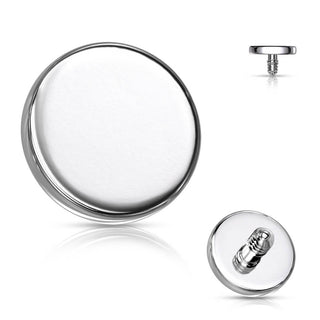
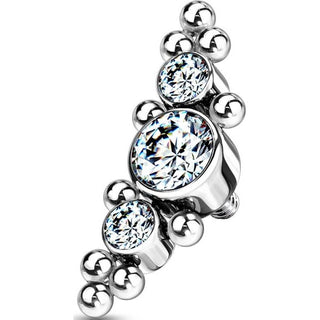

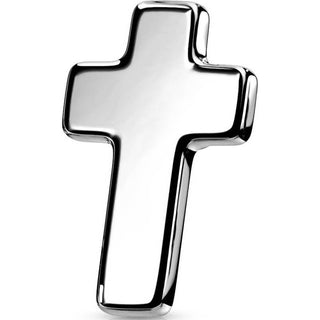
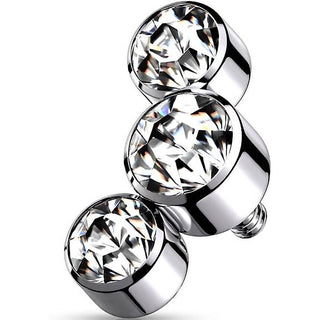


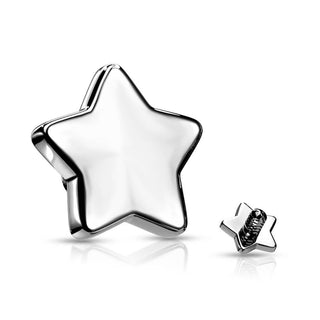


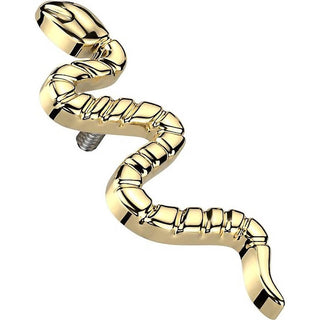


Dermal Anchor
The dermal anchor piercing, also known as a microdermal piercing, is an innovative type of piercing that can beautify almost any part of your body. This piercing style involves a piercing implant that is placed or anchored under the skin. That's why it is often referred to as a dermal anchor. Since dermal anchors don't have an exit point, they are also called single-point piercings. A dermal anchor piercing is possible on almost any part of the body – your imagination knows no bounds. Areas like the face, neck, or waist, which previously weren't suitable for piercing, can now be adorned with as many piercings as you like using this method.
In our shop, you will find a huge selection of dermal anchor tops in various styles and designs. Whether you prefer simple tops in different colors or sparkling highlights, we offer the perfect piece of jewelry for every taste. Unique shapes like sun, flower, or moon tops give you a special radiance. Highly polished tops ensure an elegant look. You can find all the important information about piercing jewelry, the piercing process, aftercare, and the risks of a dermal anchor right here in our practical guide.
Popular Body Parts for Dermal Anchors

Although dermal anchors can be placed on almost any part of the body, some areas are particularly favored for this special type of piercing. These include the face and the décolleté. On the face, dermal anchors are frequently used to accentuate the eyes and cheekbones. The dermal anchors are placed around the eye or cheekbone area. You can even place several dermal anchors next to each other to really make the area stand out.
Dermal anchor implants are also very commonly placed on the décolleté and the nape of the neck. Here too, multiple dermal anchors placed along the collarbone accentuate the décolleté in an extraordinary way.
Dermal anchor piercings can also be placed under the skin in all sorts of constellations. You can use multiple dermal anchors to form shapes like triangles or stars on your skin. A particularly popular look is arranging several dermal anchors in a symmetrical line, which emphasizes and highlights the specific body part.
Dermal anchors can be used not only to highlight individual body parts but also tattoos. The dermal anchor is integrated into the design of an already healed tattoo, giving it a very special touch.
Some body parts, like the hands or fingers, are popular but not recommended for dermal anchors. Hands are constantly in motion and frequently come into contact with germs and dirt. This complicates the healing process and increases the risk of snagging the body jewelry. Additionally, a dermal anchor can grow out much faster here than in other areas. Skin areas exposed to constant friction from tight clothing, like bras, are equally unadvisable.
Piercing Jewelry Dermal Anchor Tops

A dermal anchor consists of two parts: a small, elongated titanium plate that is anchored in the skin, and a dermal anchor top that is screwed onto the plate. For this purpose, there is a vertical threaded bar on the plate where the top is attached. Unlike other piercings, a dermal anchor can only be closed with internally threaded dermal anchor parts, as the small plate under the skin is equipped with an internally threaded bar. This is the gentlest option for the piercing site, because with an internally threaded bar, the sharp threads are on the inside, while only the smooth surface of the bar comes into contact with the skin on the outside. This allows the dermal anchor piercing to heal better.
In our shop, you will find many different dermal anchor tops that turn your dermal anchor piercing into the absolute highlight of your piercings with their special designs and shapes. Shapes like suns, moons, lightning bolts, or snowflakes ensure a unique look. Tops in the shape of spikes, balls, or domes offer a great alternative to simple, round tops. Flower and star tops adorned with sparkling crystal or opal stones beautify any part of your body. Dermal tops with motifs like bullet casings or the biohazard symbol stand out from the crowd and offer an edgy vibe.
The bar thickness of dermal anchor tops is usually around 1,2 mm – 1,6 mm, while the diameter of the tops is about 2 mm to 6 mm and the height is roughly 3 mm. The smaller sizes are known as microdermals.
With our practical dermal anchor extension bars, the distance between the skin and the top can be increased. This can be especially advantageous for fresh dermal anchors, as it creates enough space for things like swelling. Another function of the dermal anchor extension is that tops with different bar thicknesses can fit into the threaded bar of the plate using the extension.
By using our dermal anchor retainers, you can wear your dermal anchor even in unsuitable situations, such as at work. The transparent retainers make the single-point piercing almost invisible, meaning it doesn't have to be removed in such cases. Especially since removing this particular type of piercing is not that simple.
While the dermal anchor plate is exclusively made from titanium, the dermal anchor tops can be made from many different materials. The tops are mostly crafted from 14-karat gold, titanium, or surgical steel. All three materials have their advantages. Titanium piercings are particularly allergy-friendly and offer high wearing comfort. A surgical steel piercing does not rust or tarnish. A 14-karat gold piercing captivates with its high-quality and durable material that will make you shine.
Inserting and Removing a Dermal Anchor

Inserting a dermal anchor implant works a bit differently than getting classic piercings. After thoroughly disinfecting the skin, the spot is marked and massaged slightly to loosen the tissue. The dermal anchor can be anchored into the skin in two different ways. In the first method, a small hole is pierced into the skin using a needle blade, and then the dermal anchor plate is inserted into the hole. In the second method, a dermal punch is used to punch out the skin at the desired location, removing about 1,5 mm – 2 mm of skin. This creates a small skin pocket where the plate is placed.
The dermal anchor plate consists of a threaded bar and three holes. The holes ensure that the plate grows together with the tissue during the healing process. This guarantees a firm fit in the skin pocket.
Unlike normal piercings, you also have to visit your piercer to remove a dermal anchor. Since a part of the piercing is located under the skin, a dermal anchor piercing cannot simply be removed by yourself. To do this, the piercer will make a small incision with a scalpel and remove the plate. Changing dermal anchor tops should also only be done by a piercer. During the change, the top and the threaded bar should be gripped with special pliers, as the bar sits flat against the skin.
When inserting a dermal anchor plate, it might bleed a little more than with other piercings. Although this can look very painful, most people rate the intensity of the pain as low to moderate. Once the dermal anchor piercing is seated in the skin, you shouldn't feel any major pain anymore. If you opt for a local anesthetic, the pain will be even less.
You can expect to pay around 60€ to 90€ for getting a dermal anchor pierced. Additionally, there are costs involved for removing the dermal anchor. In most studios, depending on the region, this amounts to about 15€ to 30€.
Aftercare and Healing

The average healing time for dermal anchors is about 3 months. The body part and surface tension also play a role here. Generally, areas with less movement and pressure heal faster.
For an uncomplicated healing process, you should avoid touching the dermal anchor as much as possible. The aftercare is basically almost the same as with classic piercings. During the first two weeks, the dermal anchor is covered with a plaster to ensure undisturbed healing. During this time, the dermal anchor should be cleaned twice a day with special piercing care products. Crusts can be slightly soaked and gently removed. Of course, you should disinfect your hands beforehand to avoid spreading any germs. As with normal piercings, swimming pools, saunas, and solariums should be avoided during the first few weeks.
After healing, the dermal anchor can be cleaned with dental floss. Using dental floss makes it easier to get between the jewelry and the skin to remove any dirt and skin particles. Special care is required when putting on and taking off clothes so as not to accidentally rip out the body jewelry. During sports, the dermal anchor can be covered with a plaster to protect the jewelry.
Risks
Similar to a classic piercing, there is also a risk of infection with a dermal anchor piercing. This can announce itself through redness, swelling, and pain. With dermal anchors, however, the infection can encapsulate more easily since there is no exit point, making it harder to remove dirt and bacteria from the piercing channel. Therefore, thorough aftercare is crucial for healing. If an infection occurs, you should visit your piercer immediately.
Another potential risk of the dermal anchor is accidentally ripping out the jewelry. This can easily happen when carelessly putting on or taking off clothes. Ordinary jewelry like necklaces can also get tangled in a dermal anchor on the décolleté or neck and rip it out. Therefore, you should be very careful when getting dressed and wearing jewelry.
With a dermal anchor, the risk of the piercing growing out is much higher compared to classic piercing types. The dermal anchor can grow out not only during the healing phase. Rejection of the piercing is also possible months or years after it has fully healed.
Generally, the lifespan of a dermal anchor is also shorter than that of normal piercings with an entry and exit point. While a classically pierced piercing can theoretically be worn for a lifetime after successful healing, a dermal anchor usually only lasts one to five years before it grows out.
After removing a dermal anchor, a scar will always remain, but this scar is usually very small and easy to hide. The piercing method also plays a role in the size of the scar. Dermal anchors inserted with a needle leave smaller scars. In contrast, dermal anchors that were punched leave relatively larger scars, as a piece of tissue is removed during punching. On the face, however, such a scar can be perceived as very bothersome regardless of its size. Therefore, especially with dermal anchors on the face, it is extremely important to think your decision through carefully before getting pierced.